Diabetes in cats: Prevention, symptoms and treatment

Whether they’re stretched out in a sunny window or weaving around your legs at dinner time, hoping for a bit of kai, our cats are part of our daily life. So, when something affects their health, it matters.
One condition that vets are seeing more often in cats is diabetes mellitus. While hearing the word diabetes can feel worrying, the reality is that many cats go on to live comfortable, happy lives with early detection and the right care.
Understanding the symptoms of diabetes, what causes the condition, and how it’s treated can help you spot problems early and support your feline mate if they’re diagnosed.
With help from our veterinarian, Dr. Rosalind Holland (BVSc, MVM, MANZCVS), here’s what every cat parent should know.
Understanding diabetes in cats
Diabetes is a condition that affects how the body manages sugar in the bloodstream.
Normally, the pancreas produces a hormone called insulin. Insulin helps move glucose (sugar from food) out of the blood and into the body’s cells, where it’s used for energy.
When a cat develops diabetes, this system stops working properly. Glucose builds up in the bloodstream instead of being used by the body.
Over time, that imbalance can affect multiple organs and lead to a range of health problems if it isn’t treated. Diabetes mellitus is one of the most common endocrine diseases in cats.
Early symptoms to look out for
Spotting the symptoms of diabetes early can make a big difference to how easily the condition is managed.
Dr. Holland explains, “The most common symptom of diabetes in cats is increased thirst and urination, and increased appetite. Although diabetic cats can often be overweight, weight loss is a common sign.”
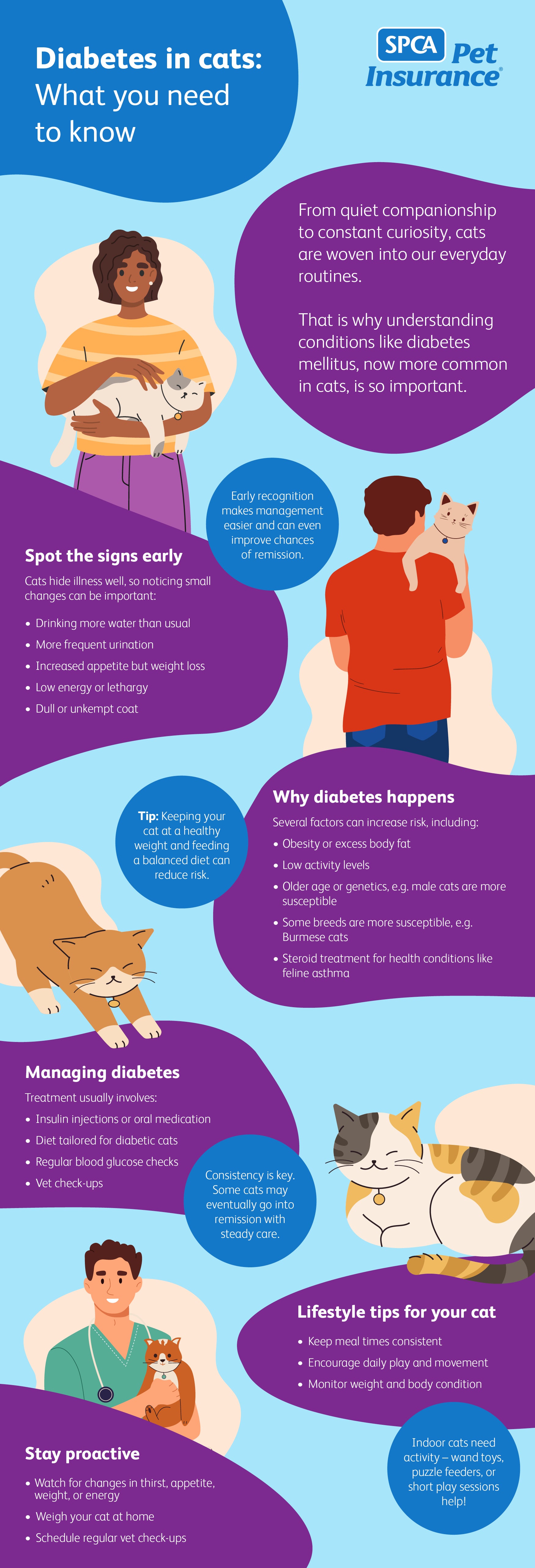
Some of the other most common signs of diabetes in cats include:
- Drinking more water than usual
- Larger or more frequent urination (you might notice wetter litter trays)
- Increased appetite
- Gradual weight loss
- Lower energy levels or lethargy
- A dull or unkempt coat
Because these changes often develop slowly, they can be easy to miss at first. Cats are famously good at hiding illness, so subtle and unexplained shifts in drinking habits, appetite, or body weight are always worth keeping an eye on.
If something doesn’t feel quite right with your cat, it’s best to check in with your vet sooner rather than later.
What causes diabetes in cats?
There’s no single cause of diabetes, but several factors can increase the risk. “Diabetes in cats is like type two diabetes in humans,” Dr. Holland says, “Some cats are genetically predisposed to develop diabetes, but obesity can be a risk factor.”
Other contributing factors to risk include lack of activity and older age. Some cat breeds, such as Burmese, are more susceptible to diabetes, as are male cats and those receiving steroid treatment for conditions like feline asthma.
Weight management plays a particularly important role in prevention. Carrying extra body fat can interfere with how insulin works in the body, increasing the likelihood of diabetes developing.
Nutrition is another important piece of the puzzle. Balanced, species-appropriate diets are essential for long-term well-being.
Treatment options and ongoing management
A diabetes diagnosis can feel daunting at first, but many cats respond very well to treatment.
Treatment is multi-pronged and usually involves a combination of:
- Medication, such as insulin injections or oral medications
- Dietary management tailored for diabetic cats
- Regular blood glucose monitoring
- Ongoing veterinary check-ups
Unlike diabetic dogs, diabetes in some cats can be managed with oral medications and diet changes. But still, in many cases, injectable insulin is needed.
While treatment is ongoing, it may not be for the rest of your pet's life. “Diabetic cats on injectable insulin may go into remission, where they no longer need medicine to manage their diabetes.” Dr. Holland reassures us. Early diagnosis and consistent management can increase the likelihood of this happening.
Diet, exercise and lifestyle changes to support your cat
Lifestyle plays a huge role in managing feline diabetes, particularly maintaining a healthy weight. Low-carbohydrate, high-protein diets are often recommended by vets, if weight plays a role, a weight loss diet may be recommended.
A significant diet change should always be undertaken with the consultation of your vet, particularly for cats with diabetes. Supporting a diabetic cat often involves steady, manageable changes rather than big upheavals.
Diabetes management is not just about what your cat eats, but when they eat and how they move. Helpful strategies can include:
- Keeping mealtimes consistent each day
- Encouraging regular play and movement
- Monitoring your cat’s weight and body condition
Indoor cats can greatly benefit from daily physical activity. Simple things like wand toys, puzzle feeders or short play sessions can help keep them active, fit, and mentally engaged.
Cooperative care
Living with diabetes means your cat will need regular monitoring and treatment. This can be a bit stressful for both pet and owner at first, but Dr. Holland offers some sound advice.
“Training your cat to participate willingly in these procedures can lower stress for both owner and cat.” She states: “Pairing these procedures with positive experiences like high-value foods and petting can help pets find these procedures comfortable.”
In simple terms, cooperative care means teaching your cat that these routines are safe and predictable. Here’s where to start:
- Pairing treatments with favourite treats
- Practicing gentle handling during calm moments
- Keeping routines consistent
- Offering reassurance and positive reinforcement
With time and patience, many cats become surprisingly tolerant of treatments that once felt unfamiliar.
Preventing diabetes and monitoring your cat’s long-term health
Not every case of diabetes can be prevented (for some, genetics puts them at high-risk regardless), but healthy habits can reduce risk and help catch problems early.
Some practical steps cat owners can take include:
- Maintaining a healthy body weight
- Watching for changes in thirst, appetite or energy
- Weighing your cat periodically at home
- Scheduling regular veterinary check-ups
Because cats are excellent at hiding illness, early changes can sometimes be easy to miss. Paying attention to small shifts in behaviour can make a big difference to early diagnosis and treatment.
Supporting your cat with the right care
If your cat is diagnosed with diabetes, try not to panic. With the right veterinary care, steady routines and a bit of patience, many diabetic cats continue to enjoy good quality lives.
Unexpected health conditions can also bring unexpected vet bills. SPCA Pet Insurance helps cover eligible treatment costs for accidents and illnesses, helping you to focus on caring for your cat.

Sophie Herlihy
Writer, zookeeper and conservationist
Sophie is an accomplished zookeeper and conservationist with a background in the veterinary industry and conservation education. With extensive experience working with animals, their welfare is always her top priority. Sophie lives in rural Aotearoa with her menagerie, including 2 cats, 4 chickens, and 12 dogs (most notably her trusty black Labrador, Jellybean). She works in a near-by wildlife sanctuary, and is passionate about educating and supporting pet owners to provide the best possible care for their animals.
17 Apr 2026